A Vietnamese cultural workshop can be one of the most memorable parts of a trip, but only when it offers more than a souvenir and a hurried photo. The best experiences give you time to handle ingredients, tools, materials, or instruments while a local teacher explains why the practice matters. That might mean shaping a lantern in Hoi An, learning a family recipe, trying a traditional textile technique, or listening closely during an arts session. This guide compares the main types of Vietnamese cultural workshops and shows how to choose one that suits your interests, schedule, and travel values.
Start with the kind of learning you want
Search results often group every hands-on activity under “Vietnamese cultural workshop,” but the experience can vary widely. Before comparing operators, decide whether you want to make something, understand a process, practice a skill, or meet the people who keep a tradition active. A two-hour class designed for beginners is not automatically better or worse than a half-day visit to a craft community; it simply serves a different purpose.
Cooking workshops
A Vietnamese cooking class is usually the most accessible choice for first-time visitors. It connects a finished dish with shopping, preparation, texture, and shared eating. Look for classes that explain ingredients and techniques rather than presenting a fixed demonstration with no participation. A useful session may include knife work, seasoning, wrapping, steaming, grilling, or balancing herbs and sauces. Ask whether the menu can accommodate allergies and whether the teacher can explain substitutions without pretending that every ingredient has an identical local equivalent.
Craft and making workshops
Craft sessions suit travelers who want a physical reminder of a place. Lantern making, pottery, weaving, embroidery, paper work, and natural-material crafts can all be rewarding, but the important question is how much of the process you will actually do. A workshop where a maker completes the difficult steps while you decorate a finished object is a short creative activity. That can still be enjoyable; it should simply be described honestly.
Music, dance, and traditional arts
An arts workshop may focus on rhythm, movement, instruments, singing, theatre, or the stories behind a performance tradition. These sessions are valuable when the teacher explains context and welcomes questions about what is appropriate for visitors to imitate. If you want a deeper introduction, pair a workshop with a performance or a visit to a cultural venue. Our guide to listening for the story in Vietnamese traditional arts offers a useful mindset: observe the form, but also listen for the history and community behind it.
Match the workshop to the destination
Vietnamese cultural workshops are shaped by place. A class in a major city may be organized around food, design, or contemporary reinterpretation. A workshop in a historic town or craft community may be more closely connected to local materials, inherited skills, and the rhythm of a neighborhood. Do not choose only by the most attractive photograph. Ask what makes the workshop belong in that destination.
Hoi An and the value of place
Hoi An is a useful example because its official heritage authority presents the town through festivals, traditional arts, craft villages, and heritage conservation, not just through its lantern-lined streets. That context matters when you choose a lantern or craft activity. A good session should help you understand the relationship between the object, the town, and the people who make or maintain it. You can extend the visit with a thoughtful visit to a Vietnamese craft village, especially if the workshop leaves you wanting to see how a skill works beyond the tourist-facing lesson.
Hanoi, Hue, Ho Chi Minh City, and regional choices
Large cities offer more variety, which makes comparison especially important. In Hanoi, you may find food, lacquer, paper, ceramics, and performance-related activities. Hue can be a natural setting for workshops connected with royal, culinary, or ceremonial traditions. Ho Chi Minh City often offers cooking, coffee, design, and contemporary craft experiences. These are broad patterns, not guarantees. Read the specific description and check the meeting point before assuming that a workshop represents an entire region.
For destination planning, browse the site’s Cultural Travel Experiences category alongside workshop listings. It can help you build a day with enough time for context, conversation, and a nearby cultural stop instead of treating the class as an isolated appointment.
Judge the teaching, not just the finished product
The strongest clue in a workshop description is the explanation of what you will learn. “Make your own souvenir” is incomplete. A better description names the materials, stages, skills, and people involved. It may explain how a recipe is used at home, how a pattern carries meaning, or why a particular material is suited to the climate.
Questions worth asking before booking
- Who leads the workshop, and do they practice or teach the skill regularly?
- How much of the session is hands-on for each participant?
- Is the class private, small-group, or a large demonstration?
- Can the teacher explain the cultural background in a language you understand?
- Are materials included, and will your finished item be ready to take home?
- What happens if you cannot complete the object or recipe during the allotted time?
- Does the activity take place in a working home, studio, market, village, school, or commercial classroom?
These questions are not a demand for a formal lecture. They simply reveal whether the organizer has thought about learning from the participant’s point of view. A workshop can be relaxed and friendly while still being precise about what it offers.
Look for respectful community relationships
“Authentic” is an overused word in travel marketing. A workshop does not become meaningful merely because it takes place in a village or uses traditional-looking decoration. More useful questions concern consent, credit, compensation, and continuity. Is the maker introduced by name? Is their role clear? Does the business explain how teachers and assistants are paid? Are visitors invited to photograph people, homes, sacred objects, or unfinished work?
Be especially careful when an activity involves minority communities or domestic spaces. The visit should not turn daily life into a stage without permission. A respectful organizer sets expectations before arrival, avoids pressure to buy, and gives participants a way to ask questions without turning a teacher into a performance. Our article on choosing a cultural workshop that gives back explores this broader question of how a visitor’s money and attention can support, rather than flatten, local expertise.
Signs of a thoughtful workshop
- The teacher is named and their experience is described clearly.
- The itinerary leaves room for questions and does not promise an impossible number of activities.
- The description distinguishes between demonstration, practice, and finished products.
- Photography and purchasing expectations are explained rather than assumed.
- The activity is connected to a real studio, school, family business, cooperative, or cultural organization.
Plan for time, comfort, and practical details
A hands-on activity can be more tiring than it looks. Cooking may involve standing near heat. Pottery can be messy. Textile and paper work may require close attention for a long period. Outdoor craft sessions can be hot, while older buildings may have steps or uneven floors. Read the practical notes and contact the organizer if you need seating, dietary adjustments, accessibility information, or a slower pace.
Allow a buffer before and after the class. Traffic, market visits, ingredient preparation, and conversation can make a workshop run differently from a tightly timed attraction. In Da Nang, for example, the official Vietnam Tourism destination guide describes a city connected by flights, trains, buses, taxis, and ride-hailing, while also emphasizing food, markets, and local neighborhoods. That combination makes it tempting to stack several activities into one day. A better plan leaves space to arrive without rushing and to stay for the part of the lesson that cannot be summarized in a checklist.
What to bring
- Comfortable clothing that can tolerate flour, clay, dye, oil, or dust.
- Closed shoes when the activity involves tools, hot surfaces, or a workshop floor.
- A small notebook or phone for recording unfamiliar words and techniques.
- Reusable water and a modest bag for carrying a finished item.
- Patience: the first attempt is part of the lesson, not a test you must pass.
Know what “authentic” can and cannot mean
Traditions change. A workshop adapted for visitors may use a shorter recipe, safer tools, translated instructions, or materials that travel well. That does not automatically make it false. The important distinction is whether the adaptation is explained. A class can be contemporary and still be culturally grounded if it credits its sources, teaches real techniques, and avoids claiming to represent every Vietnamese household or community.
Be wary of sweeping promises such as “the one true Vietnamese recipe” or “a secret tradition no one else can access.” Vietnam has regional differences in food, language, dress, architecture, ritual, and craft. A teacher who says, “This is how our family or community does it,” is often giving you more useful information than a marketer who claims universal authority.
You can also broaden your preparation with the site’s Traditional Arts & Performances category. It helps separate a workshop that teaches a practice from a performance that asks you to watch, while showing how the two can complement each other.
Make the most of the session once you arrive
Arrive ready to participate, not to prove that you already understand. Ask the teacher to repeat a word, demonstrate a movement slowly, or explain why a step is done in a particular order. If you are working with food, taste carefully and notice texture. If you are making an object, pay attention to where the material resists. If you are learning music or dance, accept that repetition is part of the form.
Ask before taking close-up portraits or photographing work in progress. Do not handle tools or materials until invited. If a teacher corrects your technique, treat the correction as the substance of the class rather than an interruption. A small purchase from the maker may be appropriate, but it should not be the condition for receiving attention or information.
After the workshop
Write down the name of the teacher, studio, village, recipe, or technique while it is fresh. If you share photographs, identify the place accurately and follow any request about privacy. Use the finished object instead of leaving it forgotten in luggage; its meaning grows when it remains part of your life. If the experience was strong, recommend the specific teacher or studio rather than using vague praise for “authentic Vietnam.” Specific credit helps skilled people be found for the right reasons.
A simple decision checklist
When two or three options look similar, compare them with this short checklist:
- Choose the subject you genuinely want to learn, not the object that photographs best.
- Confirm the location and allow realistic travel time.
- Check how much of the process is hands-on.
- Look for a named teacher and a clear explanation of local context.
- Ask about group size, accessibility, dietary needs, and photography.
- Prefer descriptions that explain community benefit without making exaggerated promises.
- Leave enough time to talk, make mistakes, and finish without being hurried.
Conclusion
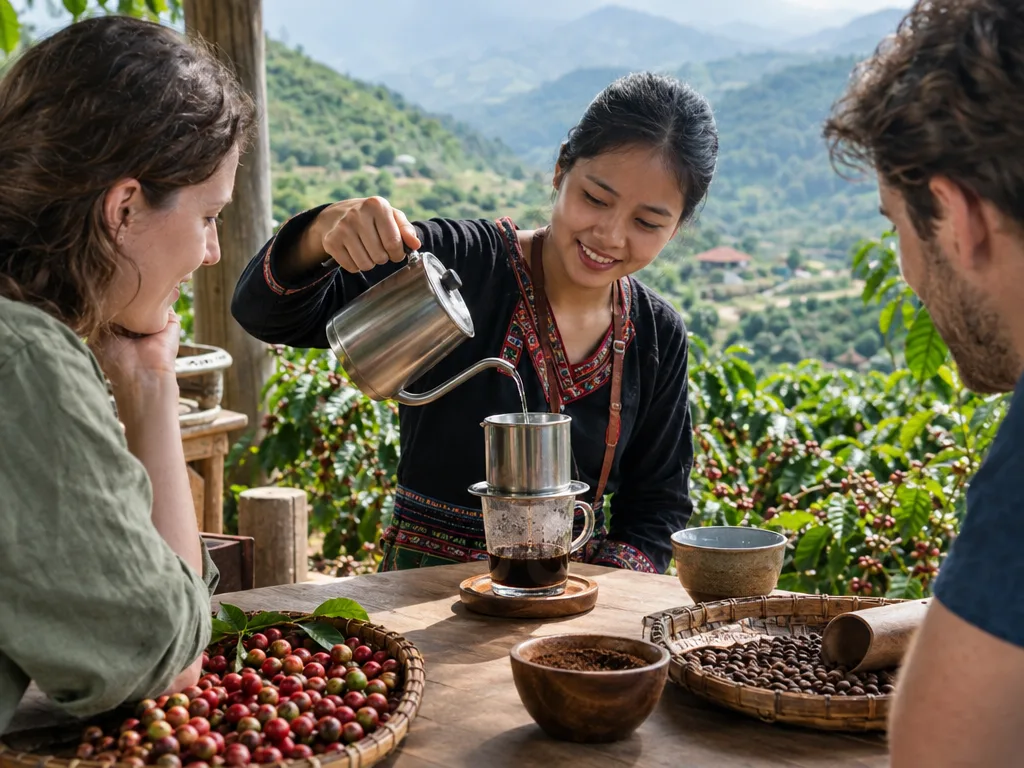
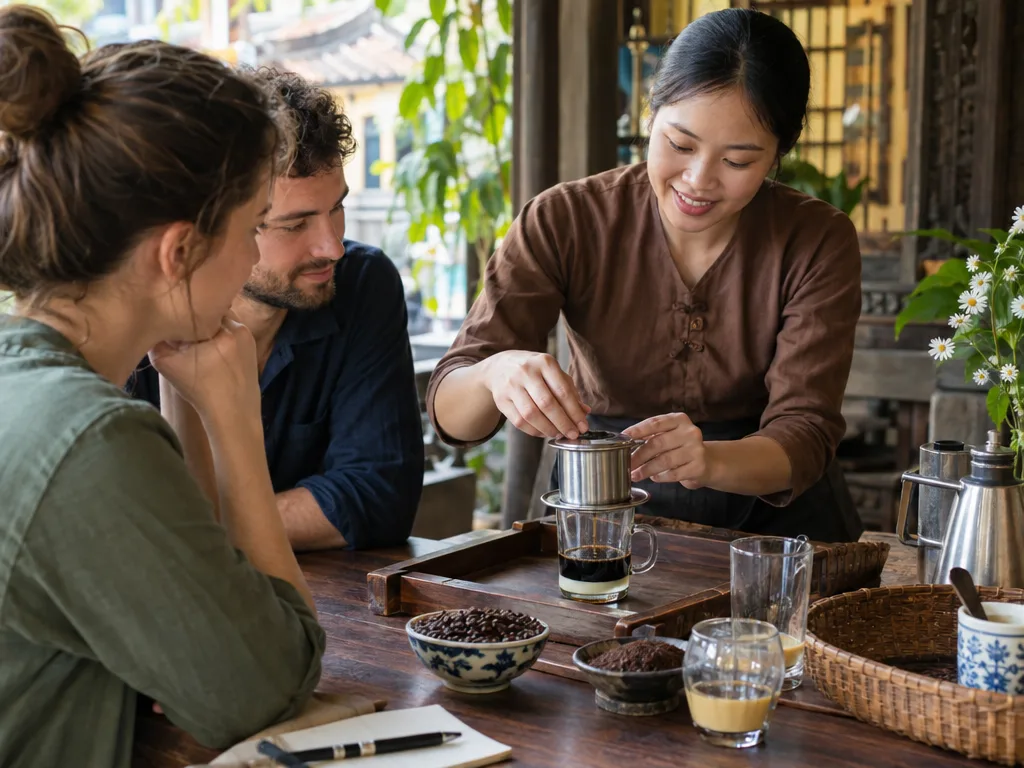
The best Vietnamese cultural workshop is not necessarily the longest, cheapest, or most photogenic. It is the one that gives you a real point of contact with a skill, a place, and a person who can explain both. Compare cooking, craft, coffee, and traditional arts by the quality of teaching and the honesty of the description. Then arrive with curiosity, ask permission, and give the process enough time. You may leave with a lantern, dish, pattern, rhythm, or cup of coffee—but the more valuable souvenir is knowing how to look at the work differently.
JOIN THE CONVERSATION
Comments (0)
No comments yet. Be the first to share a thought.