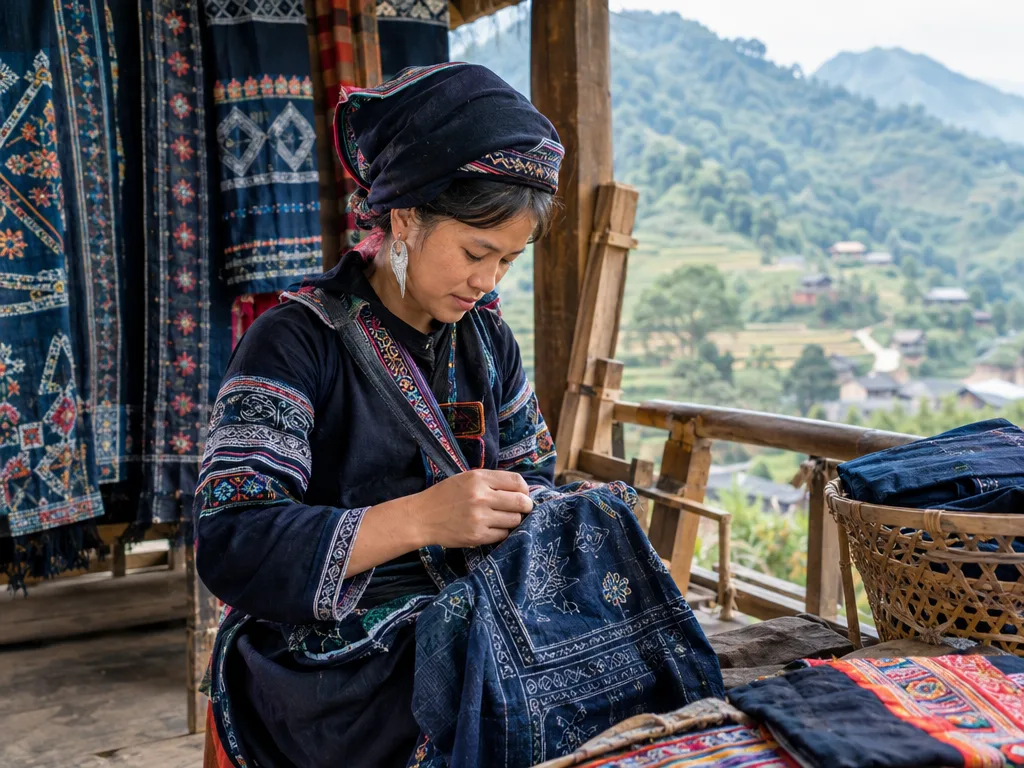
Vietnam’s ethnic minority textiles are more than colorful souvenirs. They are visual records of identity, place, skill, family knowledge, and occasion. A thoughtful traveler can learn by noticing how cloth is made, worn, explained, and sold—without treating a community’s living culture as a costume rack. This guide focuses on how to understand Vietnam ethnic minority textiles, choose encounters responsibly, ask better questions, and buy in ways that respect makers.
Start with diversity, not a single story
Vietnam is home to 54 ethnic groups, including the Kinh majority and 53 ethnic minority groups. That national figure is a starting point, not a shortcut that makes every highland community seem alike. Clothing, language, architecture, foodways, ceremonies, and textile traditions differ across communities and regions. Even within a named group, local history, household practice, and contemporary design can vary.
Before visiting a market, museum, village, or social enterprise, replace the question “What do ethnic minorities wear?” with more precise questions: Which community made this? Is the item everyday clothing, ceremonial dress, a contemporary adaptation, or a product designed for visitors? What materials and techniques are involved? Who is explaining the work, and who benefits from a purchase?
Textiles can be both personal and public. A garment may communicate age, marital status, community belonging, religious practice, or regional identity. It may also be made for a changing market, combining inherited techniques with new colors, cuts, or products. The most respectful interpretation leaves room for both continuity and change.
Learn to read color, pattern, and construction
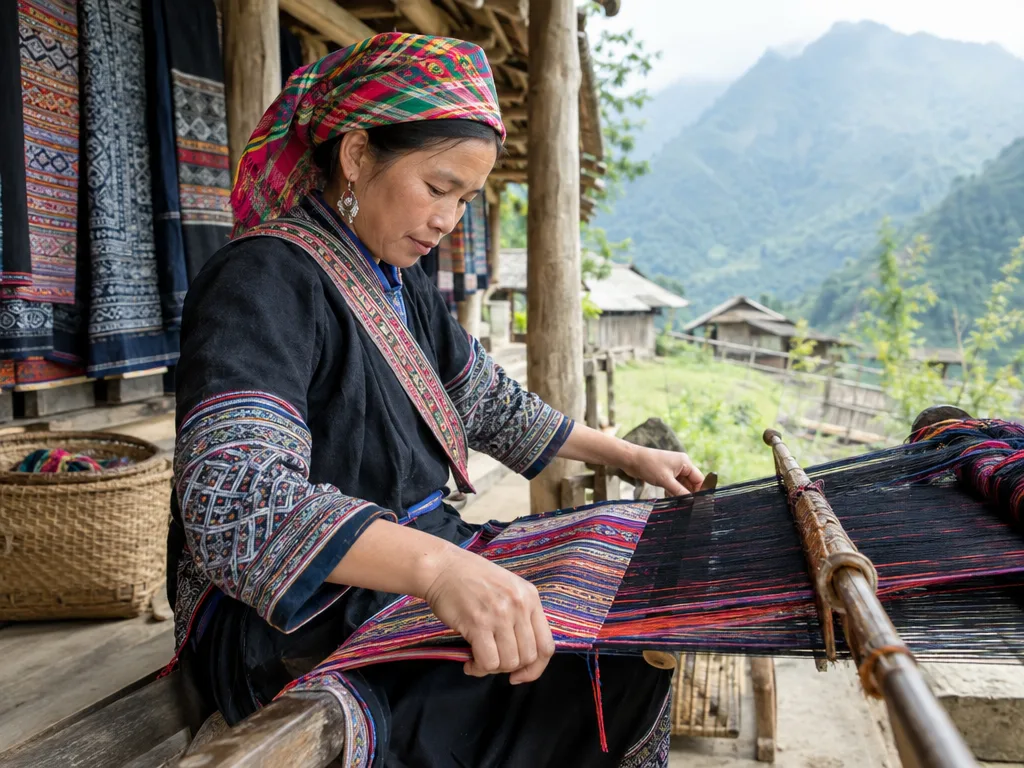
Ethnic minority textiles are often introduced through color, but color is only one layer of meaning. Look at the relationship between fabric, thread, embroidery, applique, batik, weaving, borders, fastenings, and the shape of the finished garment. Ask how long a technique takes and whether the piece was made by hand, on a household loom, with commercial fabric, or through a combination of methods.
Examples travelers may encounter
Official Vietnam Tourism guidance describes H’Mông clothing associated with deep indigo dyeing and Red Dao clothing known for intricate geometric embroidery and strong pattern combinations. These examples can help a visitor notice technique and visual contrast, but they are not a complete description of either community. Treat them as invitations to look closer, not labels to apply to every item in a shop.
- Indigo cloth may show variation, soft fading, uneven edges, or marks of repeated use.
- Embroidery can carry patient, highly skilled work that is easy to underestimate when seen only as decoration.
- A contemporary bag, jacket, or scarf may adapt older motifs for a new purpose rather than replicate a complete traditional costume.
- Machine stitching or factory cloth does not automatically make an object meaningless; ask how the seller describes its origin and labor.
Do not touch a garment being worn by someone without permission, and do not ask a person to model clothing simply because it looks photogenic. A textile can be an object of study without becoming a performance for visitors.
Use museums to build context before shopping
A museum visit can make a later market encounter more thoughtful. The Vietnam Museum of Ethnology presents Vietnam as a country of 54 ethnic groups and organizes its work around exhibitions, education, research, and collections. That combination encourages visitors to see clothing alongside homes, tools, family life, belief, and history rather than isolating one visual style.
When you visit an ethnology museum or cultural center, choose one question to carry through the galleries. You might track how textiles relate to climate, how clothing changes between daily and ceremonial use, or how a museum explains who made and used an object. Read labels slowly, note the community name used by the institution, and compare several examples instead of photographing one “typical” outfit.
Museums are not neutral windows into every living community, so keep learning after the visit. Ask whether an exhibition is historical, contemporary, or both. Look for the voices of community members, makers, researchers, and educators. If a display gives only a broad national summary, treat it as a foundation for further questions rather than a final answer.
Choose markets and village visits with care
Markets in northern Vietnam can be lively meeting places where residents shop, trade, eat, travel, and maintain social connections. They are not automatically cultural shows. Move slowly, avoid blocking stalls, and remember that most people are busy with ordinary responsibilities. If you join a guided visit, ask how the guide works with local sellers and whether the route leaves time for independent observation.
In a village, do not assume that a house, loom, workshop, or family gathering is open to the public. Ask before entering, photographing, recording, or handling materials. If a demonstration is arranged, clarify whether it is a normal working activity or a presentation created for visitors. Neither is inherently wrong, but the distinction helps you understand what you are seeing.
- Choose a small group or community-connected host when possible.
- Follow local guidance about pathways, homes, sacred areas, and private events.
- Do not photograph children, elders, or makers at close range without clear permission.
- Ask before bargaining, especially when the seller explains that an item is handmade.
- Leave space for people who are shopping or working, and do not turn a crowded market into a photo set.
The goal is not to remove all interaction. It is to make interaction mutual, legible, and welcome.
Buy textiles in a way that supports makers
Buying directly can support household income, but “direct” is not always easy to verify. A stall may sell work made by the person present, work sourced from nearby families, or products purchased through a larger supply chain. Ask open questions rather than demanding a simple ethical label: Where was this made? Which part was handmade? Is the design associated with a particular community? Does the price reflect the maker’s work?
Be realistic about what a responsible purchase can accomplish. One transaction cannot preserve an entire tradition, and a visitor should not expect a maker to provide a full cultural lesson while negotiating a low price. Pay a fair price when you value the labor. If you want a discount, ask politely and accept the answer. Buying fewer, better-understood items is usually more meaningful than collecting many pieces whose origins you cannot explain.
Questions worth asking before you buy
- Who made the textile, and where?
- What technique or material should I understand?
- Is this intended for everyday use, ceremony, or a contemporary market?
- How should it be washed, stored, or repaired?
- Does the seller work with a cooperative, family workshop, or social enterprise?
Some travelers worry that asking questions will sound suspicious. A warm, specific question usually shows respect. Listen more than you speak, and do not pressure a seller to reveal private information about family income or cultural practice.
Understand appreciation and appropriation
Appreciation begins with context and consent. Appropriation often begins when a visitor removes an object, motif, or garment from its meaning and presents it as an exotic prop. Wearing a newly purchased scarf as a scarf may be very different from putting on ceremonial clothing for a staged photograph. If a host invites you to try something, follow their explanation and ask how they would like it represented.
Be especially cautious with headdresses, jewelry, ritual objects, and complete costumes. Their meanings may be connected to age, gender, spiritual practice, status, or community membership. “It is beautiful” is not enough reason to touch or wear them. If you are unsure, admire the craftsmanship without handling the item.
Photography deserves the same care. Ask permission before photographing a person, a maker at work, a private home, or a ritual. A nod toward a camera is not always informed consent. If someone declines, accept it without negotiation. Do not post a person’s name, location, or story as content unless they understand what you intend to share.
Plan a textile-focused cultural day with depth
A good textile experience does not need to fill an entire trip. Give it a clear shape: begin with context at a museum or reliable cultural center, continue with a market or community-led visit, and end by reviewing what you learned before buying. Leave enough time for conversation and uncertainty. A rushed stop encourages snapshots and quick assumptions.
Pack practical basics: comfortable clothing, permission to ask, a translation aid, cash appropriate for the setting, and a notebook for names and techniques. Avoid promising to buy before you understand the item. If you are traveling to a remote area, confirm transport and local access conditions close to departure rather than relying on an old blog post.
Afterward, record the community name, maker or organization if they wish to be credited, technique, and care instructions. Share photographs responsibly. If a guide, cooperative, museum, or social enterprise helped you learn, recommend the specific experience accurately rather than describing an entire community through one encounter.
Questions that lead to better understanding
Use questions that invite explanation instead of testing someone’s authenticity. “How is this made?” is more useful than “Is this real?” “What does this pattern mean here?” is better than assuming every motif has one fixed translation. “What would you like visitors to understand?” gives a host space to set the terms of the conversation.
Remember that people are not museum exhibits. An artisan may be proud of inherited knowledge and interested in modern design. A young person may wear global fashion and still care deeply about community traditions. A market seller may be both a cultural representative and a worker trying to make a living. Holding those realities together is the beginning of a better visit.
Care for what you carry home
Responsible ownership continues after the journey. Ask for washing and storage advice, especially if the textile includes natural dye, hand embroidery, or layered construction. Keep a maker’s explanation with the item so its origin does not disappear when the travel memory fades. Do not cut a textile into a new product simply because you like the pattern; first consider whether the design, garment, or motif has a particular cultural meaning.
When friends ask about a textile, describe what you know and what you do not know. Say which community or place the seller identified, whether the piece was handmade or adapted, and why you chose it. Avoid calling an item “authentic” when you cannot verify that claim. A careful story is more respectful than a confident but inaccurate one.
Vietnam ethnic minority textiles reward patient attention. Look beyond bright color to labor, setting, voice, and choice. When you learn before buying, ask permission before photographing, and spend with care, your visit becomes less about collecting an image and more about meeting a living culture on respectful terms.
JOIN THE CONVERSATION
Comments (0)
No comments yet. Be the first to share a thought.