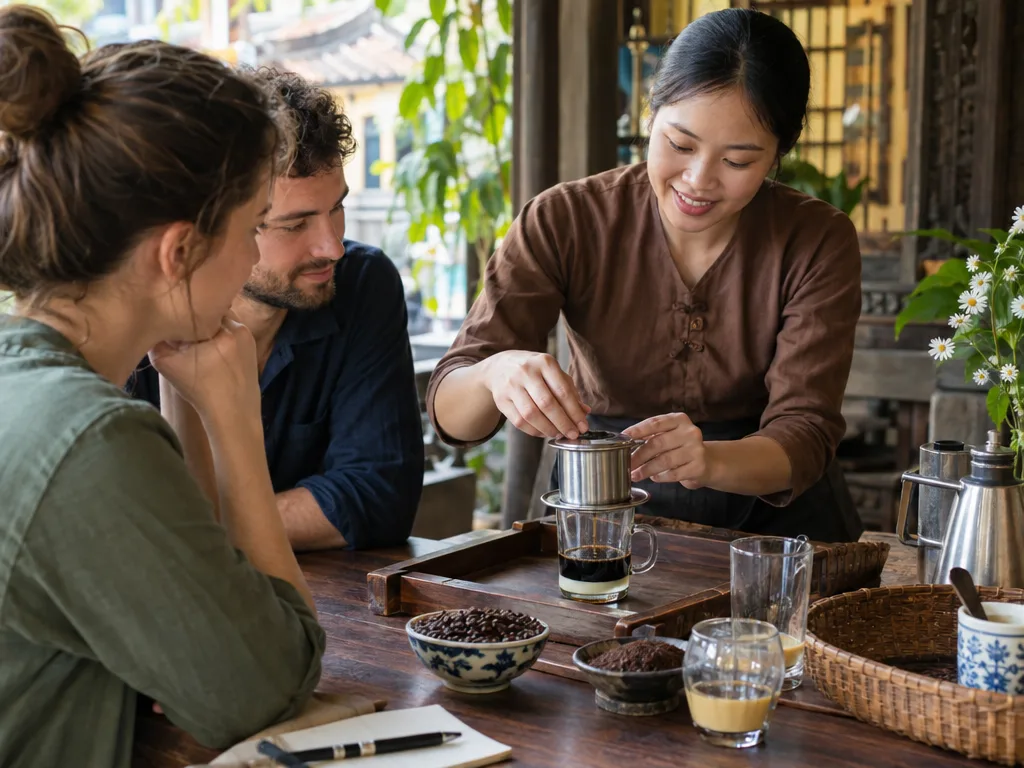
A Vietnamese coffee workshop can be much more than a quick drink and a souvenir photo. Done well, it introduces you to a farming landscape, a slow preparation method, a vocabulary of taste, and the everyday social life built around a small cup. The best experiences leave you with practical brewing skills and a better understanding of why coffee matters in Vietnam.
What you actually learn in a Vietnamese coffee workshop
Most workshops combine demonstration, guided practice, tasting, and conversation. The balance varies, so read the description carefully rather than assuming every class includes the same activities. A useful session should explain the ingredients and equipment, show the brewing sequence, let you repeat it yourself, and make space for questions.
Look for a class that treats coffee as a living culture rather than a novelty. You may learn how a metal phin filter works, how grind size affects dripping speed, why condensed milk is used in familiar drinks, and how different preparations change the balance between bitterness, sweetness, aroma, and body. You may also discuss the people behind the cup: growers, roasters, baristas, family-run cafés, and the communities connected to coffee-growing regions.
- How to assemble and use a phin without rushing the drip.
- How roast, grind, water, and dosage change the cup.
- How to taste coffee before adding milk, ice, or other ingredients.
- How to compare classic and contemporary Vietnamese coffee drinks.
- What questions help you understand a workshop’s local contribution.
Why the phin matters
The phin is a small metal filter placed over a cup. Hot water passes gradually through coffee grounds, creating the slow-drip ritual many visitors associate with Vietnamese coffee. It is simple equipment, but the method rewards attention. If the coffee drips too quickly, the cup may taste thin; if the flow stops, the grounds may be packed too tightly or the filter may be pressed too firmly.
A good instructor will show you the small decisions that make the process repeatable: warming the cup, distributing the grounds, placing the press gently, wetting the coffee before the main pour, and adding water in stages. The point is not to memorize one supposedly perfect recipe. It is to notice how the coffee responds and adjust with care.
Ask whether you will brew more than one cup. One demonstration can look easy because someone else is controlling every variable. Hands-on repetition helps you understand timing, drip rate, and the difference between following instructions and reading the coffee.
Which Vietnamese coffee drinks might you taste?
Cà phê sữa đá, often translated as Vietnamese iced coffee, is commonly made by brewing dark-roast coffee through a phin into sweetened condensed milk, then stirring and pouring it over ice. The result is concentrated, sweet, and refreshing, but it is also a useful lesson in balance: the intensity of the coffee is designed to meet the sweetness of the milk.
Depending on the teacher and city, you may encounter egg coffee, salt coffee, coconut coffee, or other modern variations. Treat these as distinct drinks with their own stories, not as interchangeable toppings. Egg coffee is associated with Hanoi and a creamy yolk-based foam; salt coffee is strongly associated with Hue’s contemporary café culture; coconut preparations bring texture and tropical sweetness. A responsible instructor should distinguish documented local associations from a sweeping claim that one drink represents all of Vietnam.
Before booking, check whether the tasting is suitable for your dietary needs. Condensed milk, egg, dairy, sugar, and caffeine may all be involved. If the class description is vague, message the provider before paying.
How to choose a meaningful workshop
Start with the instructor. Is the class led by a barista, roaster, grower, café owner, culinary teacher, or cultural educator who can explain their connection to the subject? A polished setting is not proof of quality, and a small class is not automatically more ethical. Look for a clear description of who teaches, what you will do, and what the fee supports.
Then examine the learning design. A strong workshop makes time for questions and practice instead of turning visitors into an audience for a sales pitch. It should explain the origin of the beans or ingredients at an appropriate level, avoid presenting one regional style as the only authentic version, and let you taste without pressure to buy a large package afterward.
Useful questions to ask before booking include:
- Who leads the workshop, and what is their relationship to coffee?
- Will each participant brew and taste, or is it demonstration only?
- Which drinks and ingredients are included?
- Are the coffee beans traceable to a region, roaster, or supplier?
- How large is the group, and how much time is hands-on?
- Can the class accommodate allergies, children, or people avoiding caffeine?
- Are purchases optional, and are prices clearly separated from the class fee?
Understanding origin without reducing coffee to a postcard
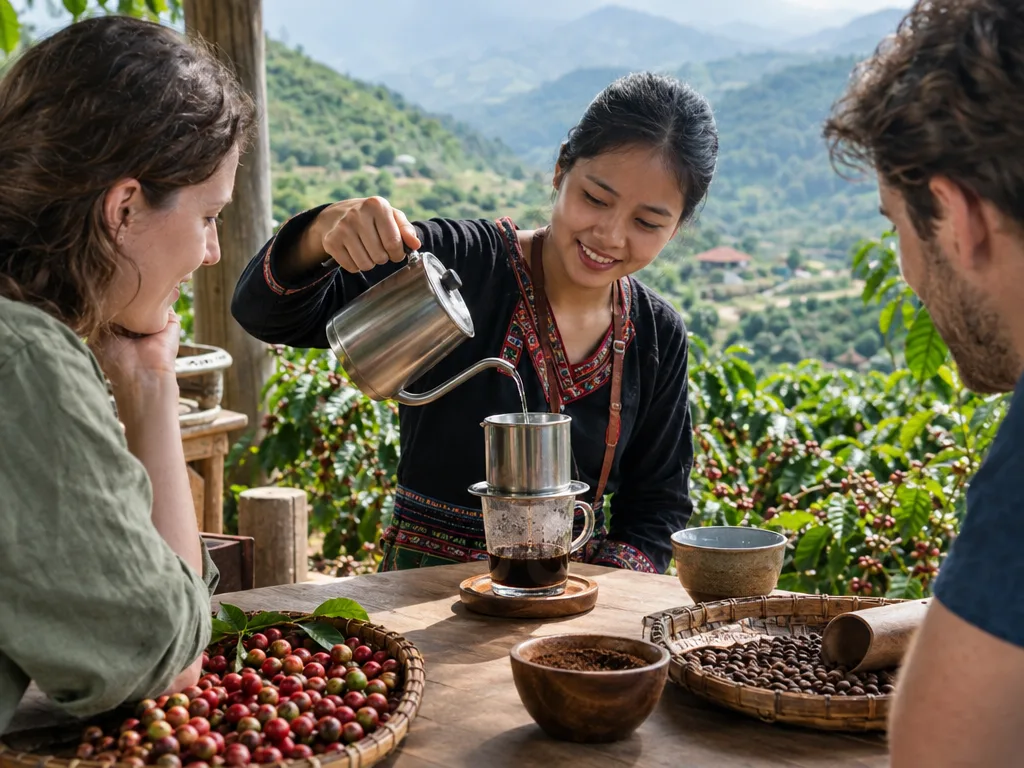
Vietnam is one of the world’s major coffee-producing countries, with production especially associated with robusta and the Central Highlands. That broad fact is a starting point, not the end of the story. Coffee involves land, weather, labor, processing, transport, markets, and changing consumer preferences. A workshop that mentions origin should also acknowledge that farmers and producing communities do not all share the same opportunities or rewards.
Listen for specific, careful language. “From the Central Highlands” tells you more than “traditional Vietnamese beans,” but it still does not identify a farm or producer. If a workshop offers single-origin tasting, ask what the label means: a province, a cooperative, a named farm, or a roasting blend. The goal is not to demand a complex supply-chain lecture during a short class. It is to recognize that coffee has a human and environmental context beyond the café counter.
Be wary of romantic claims that portray rural coffee communities as scenery or suggest that one purchase single-handedly transforms livelihoods. Prefer teachers who explain their own sourcing honestly and describe support in proportionate terms.
A simple tasting method for beginners
You do not need specialist vocabulary to taste thoughtfully. Begin by noticing the aroma before stirring. Then take a small sip while the coffee is warm and ask three simple questions: What is the first impression? What remains after swallowing? What changes when you add milk or ice?
Compare cups one variable at a time. If possible, taste the same coffee black and with condensed milk. Notice whether sweetness softens bitterness, whether the aroma remains clear, and whether the texture changes. When comparing two coffees, keep the serving method similar. Otherwise you may be tasting the equipment or recipe more than the beans.
Words such as nutty, smoky, chocolate-like, earthy, floral, bright, heavy, or clean are invitations to describe your experience, not grades that you must get right. A workshop should make curiosity easier, not make beginners feel tested.
How to participate respectfully
Arrive ready to listen. If a teacher shares a family recipe, sourcing story, or regional reference, ask before recording it for commercial use. Do not photograph people, roasting spaces, farms, or handwritten recipes without permission. If the class includes a market visit or a conversation with growers, remember that participants are meeting people at work, not entering a themed performance.
Respect the pace of the activity. Brewing may look slow because the method is intentionally slow. Avoid turning every pause into a demand for a faster demonstration. If you dislike a strong or sweet drink, say so politely and ask whether there is another way to taste it. Waste less by taking small portions and following the instructor’s guidance.
Buying beans can be a good way to continue learning, but it should be a choice. Ask how to store them, when they were roasted, how to brew them, and whether the packaging gives useful origin information. A smaller purchase you will actually use is usually more thoughtful than a large bag chosen under pressure.
Planning your workshop around a Vietnam itinerary
Choose the setting that matches your curiosity. A city café class may focus on drinks, service, and contemporary café culture. A roastery visit may emphasize roasting and sensory comparison. A farm-based experience may add landscape and production context, but it can require more travel and may be seasonal. None is automatically better; the right choice depends on how much time and depth you want.
Leave room after the class. Coffee tasting can be tiring, especially when several concentrated drinks are served. Pair the workshop with a slower cultural activity rather than stacking it between rushed transfers. If you are visiting a craft village, museum, or heritage district on the same day, plan a clear theme so the experiences support one another instead of becoming a checklist.
Confirm the meeting point, duration, language, accessibility, cancellation terms, and what is included through the provider’s current information. These details change, and a search snippet or old review is not a substitute for direct confirmation.
What to bring and what to take home
- Comfortable clothing and a notebook for ratios, tasting notes, or Vietnamese terms.
- A reusable water bottle to reset your palate between samples.
- Questions about caffeine, allergens, sourcing, and storage.
- Patience for a method designed around gradual dripping.
If you buy a phin, ask whether its size matches the amount you normally drink and whether the filter is easy to clean. If you buy coffee, choose a quantity suited to your remaining trip and home routine. Write down the grind recommendation and brewing steps before leaving; the most meaningful souvenir is a skill you can repeat.
Questions worth asking your teacher
Try questions that open a conversation rather than searching for a single “correct” answer: How does this café or roaster choose beans? What changes between a city blend and a regional coffee? Which part of brewing is most affected by water? How do local customers drink this preparation? What should a visitor avoid assuming about Vietnamese coffee?
These questions help you move beyond the familiar image of a sweet iced drink. They also give the instructor room to explain variation across regions, generations, cafés, and households. A good workshop does not flatten Vietnam’s coffee culture into one recipe. It gives you a way to keep noticing.
Final checklist
- Choose an instructor with a clear connection to coffee.
- Confirm the class is genuinely hands-on.
- Check ingredients, caffeine, allergens, language, and accessibility.
- Ask what origin and sourcing information the teacher can provide.
- Practice the phin slowly and taste before adding extras.
- Photograph people and workspaces only with permission.
- Buy only what you can use, and record the brewing advice.
A Vietnamese coffee workshop is worth choosing when it turns a familiar beverage into a fuller encounter with technique, taste, place, and people. Come prepared to learn rather than collect a quick photo, and you will leave with more than caffeine: you will have a practical way to keep exploring Vietnam’s everyday culture.
JOIN THE CONVERSATION
Comments (0)
No comments yet. Be the first to share a thought.