Vietnam’s ethnic minority cultures are not a single attraction or a colorful backdrop for photographs. They are living communities with distinct languages, histories, houses, foodways, beliefs, farming systems, craft traditions, and ideas about family and place. For a visitor, the most rewarding approach is not to collect images of “tribal Vietnam,” but to learn how diversity is organized and to meet people on terms that leave room for dignity, privacy, and exchange.
This guide explains how to explore ethnic minority cultures in Vietnam with more context. It covers what to learn before a trip, how to choose a meaningful place to visit, what a homestay or market can and cannot show you, and how to ask questions without turning culture into a performance. If you are starting broadly, pair this guide with Learning About Ethnic Diversity in Northern Vietnam, then use the ideas below to plan a more thoughtful experience.
Start with diversity, not a single stereotype
Vietnam is commonly described as a country of 54 ethnic groups: the Viet, also called Kinh, and 53 ethnic minority groups. The Vietnam Museum of Ethnology presents these communities through several broad linguistic families, including Austroasiatic, Tai-Kadai, Hmong-Yao, Sino-Tibetan, and Austronesian. These classifications can help visitors see relationships, but they are only a starting map. A linguistic family is not the same thing as a complete cultural identity, and two neighboring communities may share some practices while differing greatly in language, clothing, ritual, or village organization.
The museum’s account is useful because it shows how varied everyday life can be. Communities have historically combined wet-rice or swidden cultivation with animal raising, gathering, fishing, commerce, and handicrafts such as weaving, forging, pottery, and carpentry. Villages often matter socially, yet house styles, family structures, spiritual traditions, and local economies are not uniform. Modern education, migration, tourism, Christianity, Buddhism, markets, and digital life also shape communities today.
That context changes the questions you bring. Instead of asking, “Which group is the most traditional?” ask how a community describes itself, which practices are still active, what has changed, and who benefits when visitors arrive. The answer will be more accurate—and more interesting—than a fixed picture of the past.
Where can visitors learn about ethnic minority cultures?
Begin with a museum or cultural center
A museum is a useful first stop because it can introduce several communities before you travel into a particular region. The Vietnam Museum of Ethnology in Hanoi explains that its exhibitions include the 54 ethnic groups and organize them through cultural and linguistic themes. Its permanent exhibition, The Peoples of Vietnam, groups displays around subjects such as the Viet-Muong, Tay-Thai, Kadai, Hmong-Yao, Sino-Tibetan, Mon-Khmer, and Austronesian worlds, as well as cultural exchange.
Use a museum to learn vocabulary and notice differences in material life: roof forms, agricultural tools, textiles, musical instruments, household objects, religious items, and forms of writing. Do not treat the displays as a substitute for meeting living communities. Instead, use them to avoid arriving with no context or expecting one village to represent everyone who shares a broad label.
Choose a region for depth, not maximum coverage
Northern mountain provinces are often associated with Hmong, Dao, Tay, Nung, Thai, Giay, and other communities, while the Central Highlands and south-central regions include many Mon-Khmer, Austronesian, Cham, Hoa, Khmer, and other populations. These broad regional patterns do not mean that every town or market offers the same experience. A better itinerary chooses one area and gives it time.
Compare a short guided visit with a slower stay. A day trip may offer a useful introduction, especially when transport time is limited, but a longer visit can reveal ordinary rhythms: school runs, farm work, cooking, weaving, shopkeeping, or preparation for a local event. The goal is not to see everything. It is to understand one place well enough to stop making assumptions about the next.
How to choose a responsible community visit
When comparing tours, homestays, villages, or cultural experiences, look beyond the most dramatic photographs. Ask who designs the experience, who guides it, where the payment goes, and whether residents can say no to activities or photography. A responsible operator should be able to explain its local partners rather than relying on vague claims about “authenticity.”
- Prefer locally owned accommodation or a clearly explained revenue-sharing model.
- Choose experiences that pay for time and skill, not only for access to a household.
- Look for small groups that allow conversation without crowding a family or performer.
- Check whether the itinerary includes consent guidance for portraits, homes, rituals, and children.
- Be cautious when a tour promises a guaranteed “traditional show” or treats residents as scenery.
Read the itinerary closely. “Visit a village” can mean a walk through public lanes, a craft demonstration, a meal with a family, a market stop, or a staged performance. Those are different activities with different expectations. If the description is vague, ask before booking. A clear answer is a good sign; defensiveness or romantic language about untouched people is not.
For a wider framework on choosing experiences, see Choosing a Cultural Workshop That Gives Back. The same questions apply to village visits: local agency, fair payment, informed participation, and a realistic description of what guests will encounter.
What to expect from a homestay
A homestay is not automatically a window into an entire culture. It is one household’s life, shaped by its location, income, age, work, language, and relationship with tourism. Some hosts may be farmers; others may run a guesthouse full time. Some homes may be built around a shared family room, while others have private guest spaces. The experience can be warm and educational without being representative of every family nearby.
Before you arrive
Confirm practical details without assuming that all homes operate like hotels. Ask what meals are included, whether bedding and bathrooms are shared, how late arrivals work, and whether there are household customs guests should know. If you have dietary or mobility needs, explain them early. A host can only prepare if the request is clear.
While you are there
Follow the household’s lead. Observe before touching objects, entering private rooms, sitting in a ceremonial place, or joining food preparation. Ask whether photographs are welcome. A friendly conversation is not blanket permission to record everyone, and a child’s presence is not an invitation to take a portrait.
Offer help when it is appropriate, but do not turn ordinary chores into a performance. You can ask whether you may join cooking, gardening, or a craft activity, then accept the answer. If a host shares a story about belief, family, or hardship, listen without demanding a more dramatic version. Cultural exchange works best when curiosity does not become extraction.
Markets, clothing, and craft: look carefully
Markets can be excellent places to understand how culture and commerce meet. They show produce, tools, textiles, livestock, food preparation, and regional trade. They also involve work. Vendors may be serving local customers, not waiting to explain their clothing or pose for a photograph. Buy something because you value it, not because you think a purchase creates permission to film the seller.
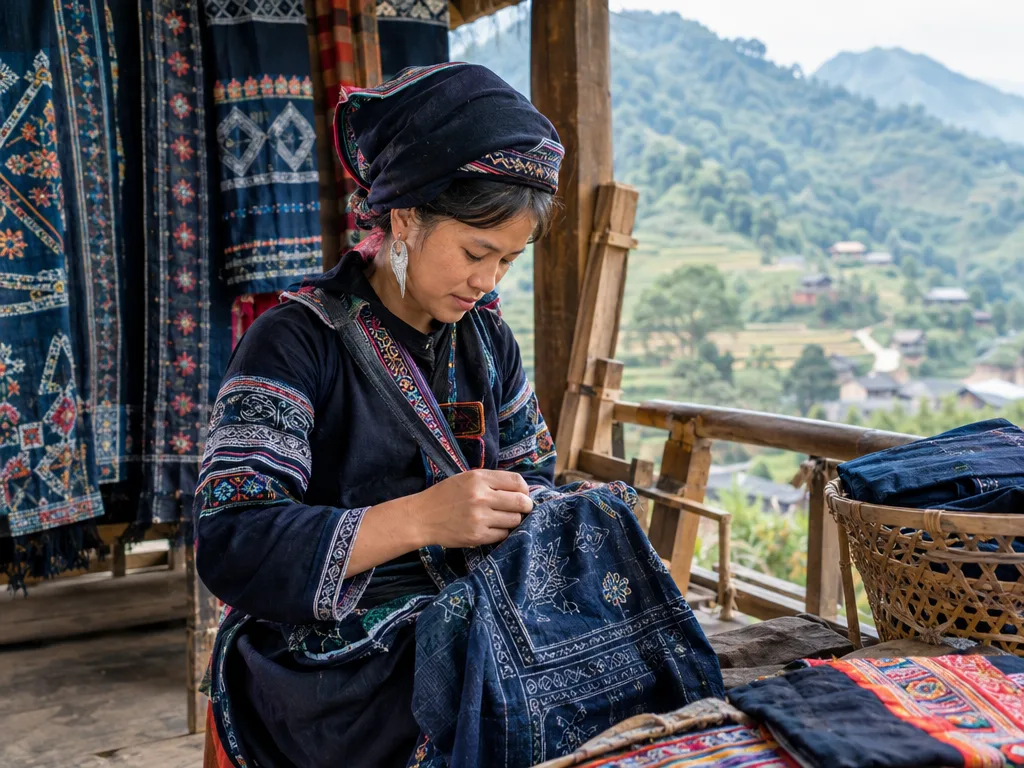
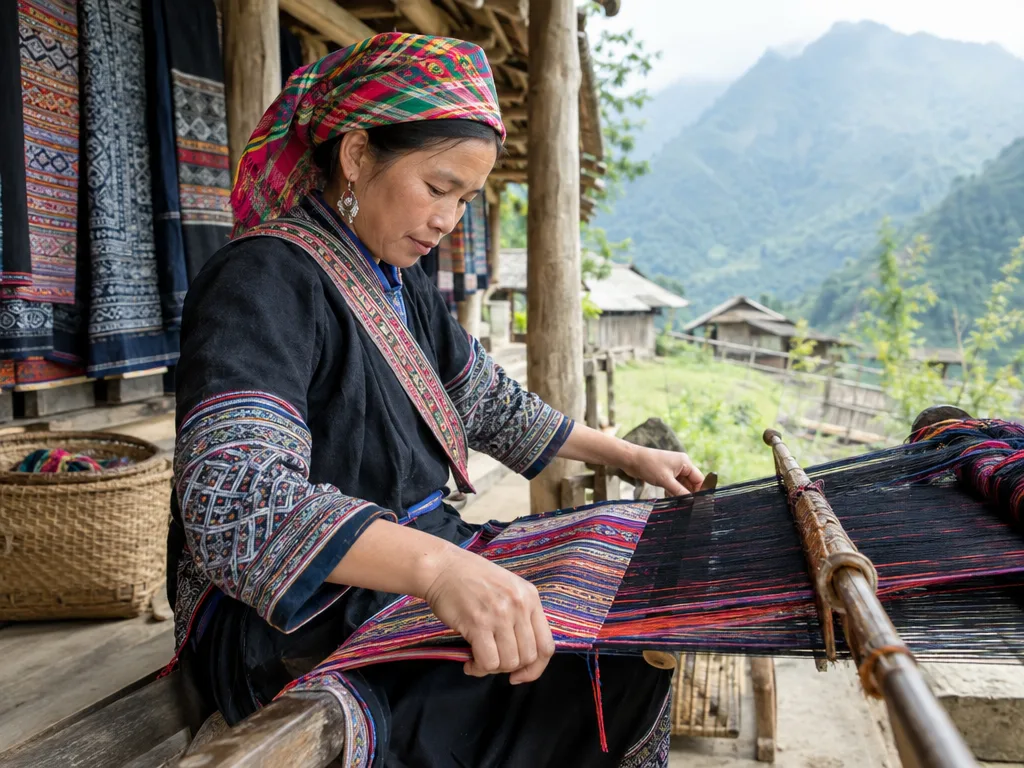
Clothing deserves particular care. Embroidery, weaving, silver jewelry, headwear, and color combinations may express community identity, age, marital status, ceremony, or personal taste. Not every garment worn in a market is a costume, and not every person wearing one wants to explain it. Ask a guide or seller respectfully, and do not touch textiles or jewelry without invitation.
Craft is also more than a souvenir category. It can connect land, labor, family teaching, design, trade, and changing demand. When buying, ask who made the item and whether it is locally produced. Avoid bargaining aggressively over work that took hours or days, while still recognizing that a fair price is not the same as any price a visitor is asked to pay.
If craft is central to your itinerary, you may also find useful context in Traditional Craft Villages. It encourages a related but distinct question: how can visitors support skilled makers without reducing living traditions to decorative products?
Festivals and sacred practices require extra restraint
A festival can reveal music, dance, food, belief, kinship, and local history, but visitors should not assume that every public event is staged for tourists. Some moments may be communal, ceremonial, or restricted. Ask whether photography is permitted, where guests may stand, and whether participation is appropriate. Follow instructions from residents or organizers, even when the best view is somewhere else.
Do not copy a ritual gesture, enter a sacred space, or handle an offering simply because you have seen someone else do it. Avoid loud commentary during prayers, processions, funerals, or moments of remembrance. If an event includes performances for visitors, enjoy them as performances while remembering that the artists are not interchangeable representatives of an entire ethnic group.
The site’s Vietnamese Festivals category can help you think about timing and etiquette more broadly. For spiritual settings, the guidance in Visiting Temples and Sacred Places Respectfully is also relevant: dress and behavior matter, but humility matters more than performing the appearance of respect.
Questions that lead to better conversations
Good questions are specific, open, and easy to decline. Ask about what a person chooses to share, not only about what you can see. For example:
- How do you describe your community or hometown?
- Which local food or craft is important to your family?
- What has changed here since you were a child?
- When is this textile, instrument, or dish normally used?
- What do visitors often misunderstand about this place?
Do not assume that a guide speaks for every resident. Ask whose perspective you are hearing and seek permission before quoting someone in a blog, video, or social post. If translation is involved, be patient; a short pause can prevent a careless interpretation. Learn a greeting where appropriate, but do not treat a few words as proof that you understand a community.
A practical checklist for a respectful visit
Before leaving, review this short checklist:
- Learn the community’s preferred name and basic regional context.
- Confirm transport, weather, walking conditions, and accommodation details with current providers.
- Carry modest clothing for homes, temples, ceremonies, and public events.
- Ask before photographing people, houses, textiles, altars, children, and ceremonies.
- Keep group sizes and voices low in residential or sacred spaces.
- Buy directly when possible and ask how money reaches makers or hosts.
- Do not give sweets, cash, or school supplies to children without local guidance.
- Share images carefully, especially when a person is identifiable or the setting is private.
- Leave room in the itinerary for an ordinary conversation rather than another attraction.
How to leave with more than photographs
The best cultural visit may not produce the most dramatic picture. It may leave you with a clearer understanding of how language, land, work, belief, family, and tourism overlap in one particular place. You might remember a meal, a careful explanation of a textile, a walk that became slower than planned, or a question you realized you had been asking badly.
Vietnam’s ethnic minority cultures are diverse, contemporary, and continually changing. Visit with preparation, spend with care, and let residents define more of the conversation. That approach does not make travel less exciting; it makes the encounter more truthful, more generous, and more useful to the people whose home you have come to see.
JOIN THE CONVERSATION
Comments (0)
No comments yet. Be the first to share a thought.