Visiting an ethnic minority village in Vietnam can be one of the most memorable parts of a northern journey, but the quality of the experience depends on how you arrive, what you notice, and what you leave behind. The best approach is not to “discover” a community as a backdrop. It is to enter as a guest, follow local guidance, pay fairly for services, and make room for ordinary life to remain ordinary.
This practical guide explains how to visit ethnic minority villages in Vietnam with curiosity and respect. It focuses on choosing a community-based experience, preparing for homestays and walks, handling photographs and purchases, and avoiding the small habits that can turn cultural contact into a performance.
Choose the right kind of village experience
“Ethnic minority village” is a broad travel phrase covering many different communities, landscapes, languages, and local economies. A terrace-farming valley near Sa Pa is not the same cultural setting as a market town in Ha Giang or a stilt-house community in Mai Chau. Start by choosing a place for its people and living culture, not only for a famous viewpoint.
Prefer hosted, locally connected visits
Look for a homestay, walking route, meal, craft demonstration, or small-group visit where a named local host or community-run organization is visible. Ask who receives the payment, who leads the activity, and whether the visit is arranged with the household or community. Clear answers are a better sign than a package built around promises of an “untouched” village.
Vietnam’s official tourism site describes the Northern Midlands and Mountains as a region of ethnic cultures, community-based tourism, heritage, and mountain ecotourism. That combination is useful for planning: cultural encounters work best when they are connected to local livelihoods and the landscape rather than separated from them as a staged attraction. You can compare the wider context with our guide to learning about ethnic diversity in Northern Vietnam.
Match the pace to the community
A meaningful visit may be a single meal and a conversation rather than a packed list of stops. Build a little unstructured time into your plan, especially if you are staying overnight. That gives your host the freedom to explain what is happening, and it lets you notice farming, cooking, school runs, and market preparation without treating every moment as an attraction.
Research the setting before you arrive
Good preparation helps you avoid imposing your expectations on a community. Read about the province, the landscape, and the type of experience you have booked. Check whether the route involves steep paths, wet ground, motorbike travel, or a transfer from a larger town. Then ask the host what visitors most often misunderstand.
Official destination guidance is a useful starting point for broad conditions. Vietnam Tourism describes Sa Pa as a highland town above valleys of rice terraces that are still farmed, with trekking routes and homestays beyond the tourist hub. Its guidance for Tuyen Quang, which now includes the Ha Giang highlands, notes cool mountain conditions, wet and slippery roads in the rainy period, and long road transfers from Hanoi. These are planning signals, not guarantees for every village, so confirm the current route locally before setting out.
- Ask how long the walk actually takes at a comfortable pace, including rests.
- Confirm what transport is arranged and whether a local guide is included.
- Check what the homestay provides, such as bedding, towels, or meals.
- Ask about weather-related changes instead of assuming a tour runs unchanged.
- Learn whether your host prefers cash, bank transfer, or payment through an operator.
For a broader approach to planning with flexibility and listening, see Planning a Cultural Trip That Leaves Room to Listen. The same principle matters here: a village visit should have enough space for local advice to change your schedule.
Prepare for a homestay, not a hotel
A homestay is usually a chance to share part of a household’s routine, not a rural hotel with a decorative theme. Standards vary. Some homes have private rooms and modern bathrooms; others offer mattresses in a shared room, simple washing facilities, or a communal sleeping area. Ask practical questions before arrival, then accept that a different rhythm is part of the experience.
What to pack
- Light layers for cool evenings and warm daytime walking.
- Shoes with dependable grip for mud, stone, and uneven paths.
- A small flashlight or headlamp for moving around after dark.
- Reusable water storage and a compact rain layer.
- Earplugs if you are sensitive to household or village sounds.
- Small personal toiletries and any medication you need.
Pack lightly enough to carry your own bag. A large suitcase can be awkward on village paths and may create extra work for the host. If you are unsure about bedding or towels, ask rather than assuming that a host can supply everything at short notice.
Follow household boundaries
Wait to be shown where to leave shoes, bags, and outdoor clothing. Ask before entering private rooms, kitchens, storage areas, or family shrines. Do not move household objects to improve a photograph. If children or older relatives are present, let the host decide whether conversation or photography is welcome.
Meals are an important part of many homestays. Watch what others do, accept an invitation warmly, and say clearly if you cannot eat something. If you have an allergy or dietary restriction, explain it when booking and repeat it on arrival; do not expect a host to identify every hidden ingredient in an unfamiliar dish. Buying a meal, rather than requesting a free taste, recognizes the labor involved in preparing it.
Walk through a village with permission and attention
Walking is often the best way to understand a mountain community, but a village is also someone’s home and workplace. Stay on the route your host or guide recommends. Ask before entering a yard, crossing a field, or approaching a person who is working. A path that looks public may lead directly through a family’s living space.
Make photography a conversation
Ask before taking a portrait, even when someone is wearing beautiful clothing or selling an attractive craft. A simple smile, gesture, and “May I take a photo?” is better than photographing first and asking later. If the answer is no, lower the camera immediately. Do not offer money to children for pictures, and do not use a long lens to make private moments seem public.
Photographing a landscape, house exterior, or market stall can still require judgment. Avoid blocking a doorway or work area. If you want to share a portrait online, ask whether that is acceptable, not only whether the original photograph was allowed. Where communication is difficult, ask your guide to translate the question and the intended use.
Do not turn daily life into a performance
Visitors sometimes ask people to repeat a task, put on special clothing, sing on demand, or pose beside a home. Unless the activity is explicitly organized as a paid demonstration, do not request it. A market is not a theater, and a farming family does not owe a visitor an explanation of every tool or ritual.
When you want to learn, use open questions: What is this made for? When is it used? Is it all right for me to watch? Then listen to the answer instead of comparing it with a simplified travel description. Our Traditional Arts & Performances section offers a useful companion perspective on listening for meaning rather than collecting spectacles.
Shop and pay in ways that support local work
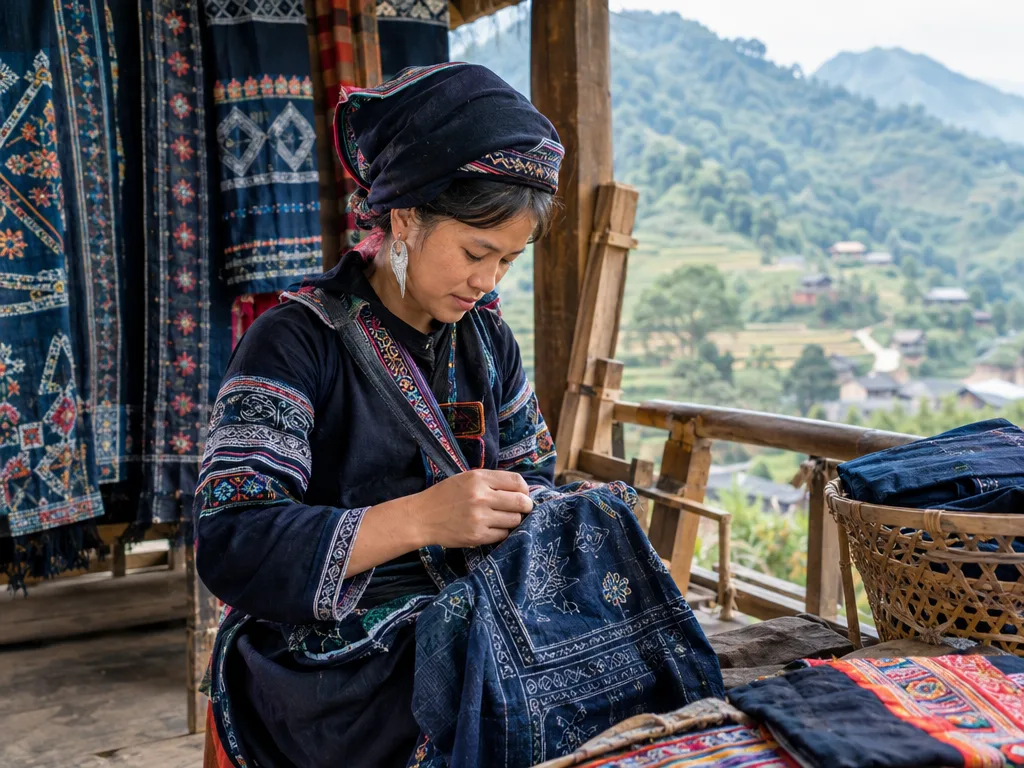
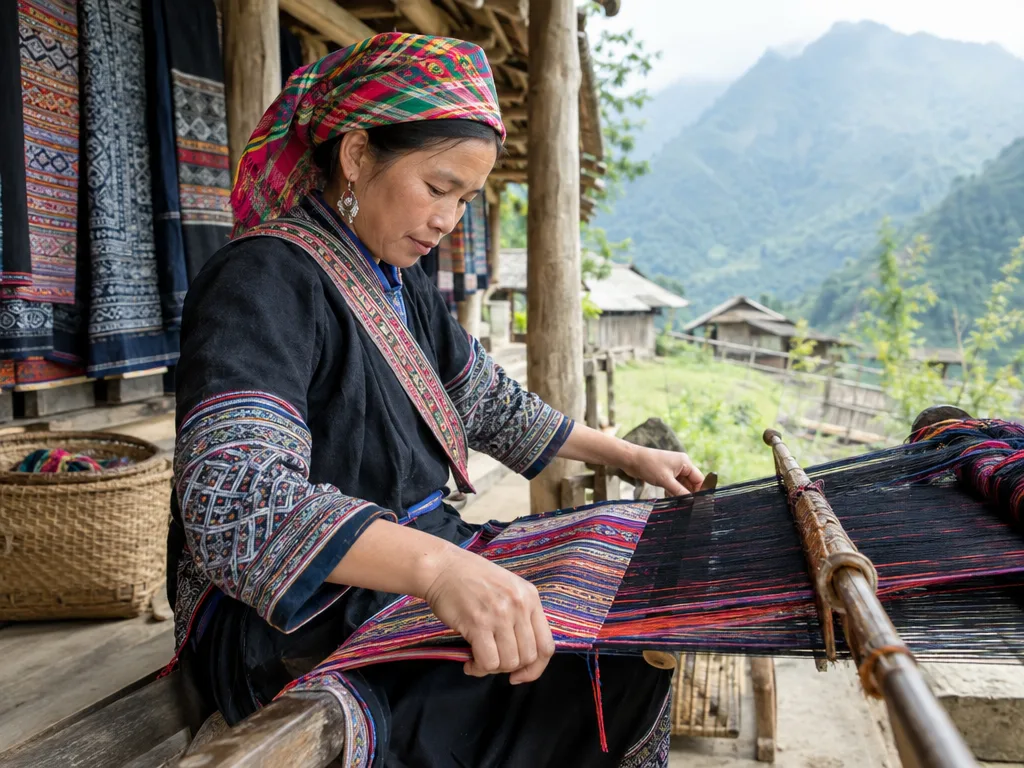
Buying directly from a maker or household can be a positive part of a village visit, but souvenirs are not automatically ethical because they are handmade. Ask what an item is, who made it, and whether the design has a particular meaning or use. Buy because you value the work, not because a seller has been pressured into a low price.
Polite bargaining may be normal in some markets, but bargaining over a small amount after a long negotiation can make the exchange uncomfortable. If you agree to buy, complete the purchase. Keep cash in small denominations when possible, while recognizing that payment methods and availability vary by village. Never photograph a craft closely and then attempt to copy it without permission from the maker.
Food, guiding, transport, and lodging are also forms of local work. A transparent fee is usually preferable to handing out sweets, pens, or money to children. If you want to contribute beyond your booking, ask the host what is genuinely useful. They may prefer that you buy from a cooperative, pay a guide fairly, or use a locally owned service.
Visit markets and festivals with extra care
Ethnic minority markets can be lively places to observe trade, clothing, food, and social connection. They are also working markets. Stand to the side when people are negotiating, avoid touching merchandise without asking, and do not photograph faces at close range as if people were exhibits. When a market is crowded, keep your bag close and let sellers serve local customers first when appropriate.
Festivals and ceremonies require an even higher level of restraint. Ask whether visitors may enter, watch, eat, or take photographs. Follow instructions about clothing, seating, sacred objects, and movement. Do not reproduce a ritual gesture for a selfie, and do not treat a religious or family ceremony as a guaranteed event on an itinerary. Our Vietnamese Festivals category can help you think about participation as a matter of context, not just timing.
If a guide cannot explain the boundaries of a ceremony, remain outside the active space and observe quietly. A respectful visit may mean missing the best photo. That is a small cost compared with interrupting an important community occasion.
Build a responsible two-day plan
A simple overnight plan can balance access with attention. On the first day, travel to the host community with enough daylight for orientation. Ask your host to explain the household and the route, take a short walk, and share a meal without trying to fill every hour. On the second morning, join only the activity that has been agreed in advance, then leave time for a calm departure.
In the Sa Pa area, official tourism guidance points visitors toward trekking, mountain lodges, and homestays outside the main hub. In the Ha Giang highlands, it describes road travel, remote towns, minority villages, and changing mountain conditions. These examples show why one itinerary cannot represent every community: the right plan depends on terrain, season, transport, and the host’s capacity.
Before leaving, settle payments, return borrowed items, dispose of your waste, and thank the household by name. If you had a good experience, write an accurate review that credits the host or guide without revealing private details. Consider linking future plans to Cultural Travel Experiences and choosing another locally hosted activity rather than repeating the same photo stop.
Questions to ask before booking
- Who owns or manages the homestay and receives the payment?
- How many guests are expected, and what is the sleeping arrangement?
- Is the walk led by a local guide who knows the households on the route?
- Which activities are genuinely available, and which depend on season or consent?
- What should visitors not photograph, touch, or enter?
- What happens if rain, road conditions, or family obligations change the plan?
These questions do more than screen a tour. They tell a host that you care about the relationship, not only the itinerary. They also reduce disappointment: the most rewarding village experiences are often quieter, more flexible, and less polished than a standard sightseeing excursion.
Leave as a respectful guest
To visit ethnic minority villages in Vietnam responsibly, replace the search for an “authentic” scene with attention to real people and real choices. Choose locally connected hosts, prepare for simple conditions, ask before photographing, pay fairly, and accept limits without argument. The result may not fit every expectation you had before arrival, but it can offer something more valuable: a genuine encounter that leaves dignity, income, and control with the community.
JOIN THE CONVERSATION
Comments (0)
No comments yet. Be the first to share a thought.