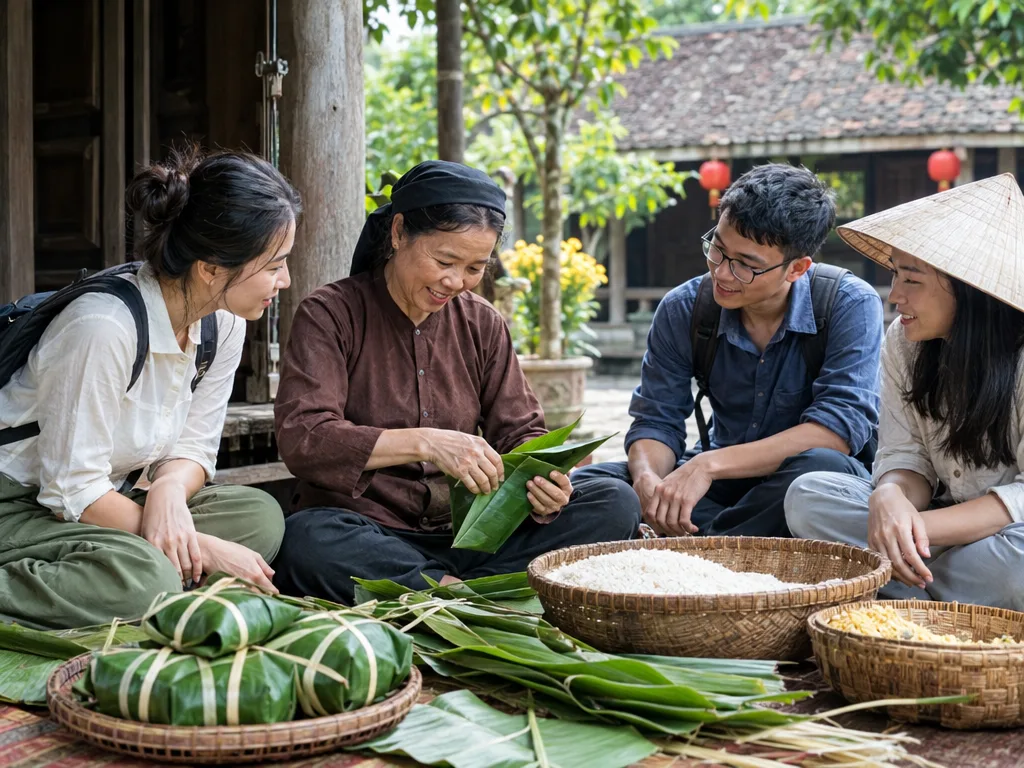
A Vietnamese cultural day trip can be much more than a sequence of photo stops. The most rewarding outings leave time to notice how a place works: who makes its objects, how a community gathers, which stories are remembered, and what visitors are invited to see. With a little structure, you can enjoy a village, heritage quarter, workshop, market, or performance without turning local life into a rushed checklist.
Start with one cultural question
The strongest day trips begin with a question rather than a landmark. You might ask how silk moves from raw material to finished cloth, how a historic neighborhood has adapted to modern life, or how food, worship, and family routines shape a town. A question gives the day a thread and helps you decide what deserves your attention.
Keep the question narrow enough to guide your choices. “What is Vietnamese culture?” is too broad for one outing. “How does a craft village preserve a making tradition while serving today’s visitors?” is more useful. It encourages you to look for people, processes, spaces, and changes instead of collecting disconnected facts.
- Choose one main theme: craft, architecture, food, faith, music, farming, or community life.
- Choose one primary place and no more than two nearby additions.
- Decide what you want to understand, not only what you want to photograph.
- Leave a quiet period for observation, conversation, or notes.
Choose a place with a living connection
Vietnam has cultural attractions in cities and countryside alike, but a meaningful experience usually has a visible connection to people who still live, work, worship, perform, or make things there. Look for places where the cultural subject is part of the setting rather than a decorative theme added for visitors.
Official tourism material describes traditional craft villages as places with distinctive products and long relationships to Vietnamese cultural and historical values. That is a useful starting point, but it is not a reason to assume every village offers the same experience. A silk village, pottery village, heritage street, communal house, or museum will each require a different pace and different questions.
Before committing, check what the place actually offers today. A destination may be known for a tradition while having limited visitor access, changing workshop schedules, or several separate areas rather than one central attraction. Use current official information where available, then treat the outing as a chance to learn rather than a promise of a staged demonstration.
Build the day around a simple route
A good cultural day trip is not necessarily packed. Plan one anchor experience for the morning, a flexible meal or rest period, and one quieter afternoon activity. This leaves room for traffic, weather, unexpected conversations, and the small details that organized itineraries often miss.
A practical rhythm
- Morning: Arrive at the main destination while your attention is fresh. Walk slowly before taking photographs and identify the spaces where work or community life happens.
- Midday: Eat nearby or choose a meal that fits the place. Avoid scheduling a distant restaurant if it will cut short your central experience.
- Afternoon: Add one complementary stop, such as a museum, market, riverside walk, workshop, or architectural landmark.
- Late day: Review what you learned and make purchases, donations, or thank-you gestures thoughtfully rather than hurriedly.
When estimating travel, remember that a short map distance can still take time on busy roads or rural routes. Keep the route compact, confirm the return plan, and avoid promising several regions in one day. A day trip feels local when it gives you time to be present, not when it proves how many places you can reach.
Look for process, not just finished products
Visitors often notice a beautiful object before they notice the labor behind it. Cultural travel becomes richer when you ask how the object, meal, building, or performance came to exist. At a silk village, for example, the official Vietnam Tourism guide describes stages that can include raising silkworms, processing fibers, weaving, dyeing, and finishing products. You do not need to see every stage to understand that a finished scarf represents a chain of knowledge and work.
Use process-focused questions when a practitioner or guide is available:
- Which part of the work takes the most time?
- Which materials come from the local area?
- What has changed because of new tools, markets, or customer preferences?
- How is the skill taught to younger people?
- Which details show the difference between handmade and factory-made work?
Ask before entering a work area or touching materials. If a demonstration is offered, watch first and follow the host’s instructions. The goal is not to test the practitioner or demand a private lesson; it is to understand the care that sustains the tradition.
Plan respectful conversations
Conversation can be the most memorable part of a cultural experience, but it should be mutual rather than extractive. Begin with a greeting, introduce yourself briefly, and ask whether the person has time to talk. A guide or host may be the right person for detailed questions, while a craftsperson may prefer to continue working.
Keep questions open and avoid treating one person as a spokesperson for all of Vietnam. Ask how this place works, how this family learned a skill, or what visitors commonly misunderstand. Do not press for private information about income, age, religion, ethnicity, or family circumstances. If language is a barrier, use a translation tool or guide without turning the exchange into a performance for your group.
Photography also needs permission. Ask before photographing people, homes, workshops, ceremonies, children, or personal belongings. A polite refusal is complete; do not bargain for access. When a person agrees, follow any limits about flash, positioning, or sharing the image online.
Eat, shop, and spend with intention
Money is part of the cultural relationship created by a day trip. Choose locally owned businesses when practical, and understand what a purchase supports. In a craft setting, compare quality and provenance rather than assuming that the most polished shop represents the whole tradition.
Ask whether an item was made locally, where the materials came from, and how the maker or cooperative benefits. This does not require suspicion toward every seller. It simply helps you buy with context. If you do not want an object, a sincere compliment or a thank-you is enough; browsing does not create an obligation to purchase.
For meals, try a local specialty when you can do so comfortably, but do not turn unfamiliar food into a spectacle. Follow the host’s lead on shared dishes, seating, and serving. Carry water, any necessary medication, and a flexible attitude toward menus. A cultural experience should expand your curiosity without ignoring your health or dietary needs.
Know when a site is sacred or private
Some cultural day trips include temples, communal houses, ancestral spaces, cemeteries, or family homes. These are not interchangeable with tourist attractions. Follow posted instructions and local guidance about clothing, footwear, photography, offerings, noise, and where visitors may stand.
Even when no sign is visible, use a lower-impact approach: dress modestly, keep voices down, avoid interrupting rituals, and do not handle objects unless invited. If a ceremony is underway, watch from an appropriate distance and accept that some areas or moments are not for visitors. Cultural travel is not diminished by a boundary; respecting it is part of understanding the place.
Prepare for weather, access, and changing plans
Comfort affects attention. Check the forecast and choose shoes suited to uneven paths, village lanes, museum floors, or wet weather. Carry sun protection and insect repellent when your route includes outdoor areas. Bring small cash where rural businesses may not accept cards, but avoid assuming that every vendor or transport provider uses the same payment method.
Confirm current access details before leaving, especially for workshops, museums, festivals, and private attractions. Opening times, road conditions, visitor rules, and transport options can change. Do not build the day around a single unverified timetable. Keep a backup activity nearby, such as a public market, walk, or cultural center, and leave enough time to return safely.
Accessibility also deserves an honest check. Ask about steps, surfaces, toilets, shade, seating, and vehicle access before booking or traveling. If you are traveling with children or older relatives, a shorter route with meaningful pauses may be better than a more ambitious plan.
Choose guides and hosts carefully
A local guide, host, or community organization can add context that a map cannot provide. Before booking, look for clear information about who leads the experience, what is included, how long it lasts, and where your payment goes. A responsible operator should explain expectations rather than promise secret access or an “authentic” performance on demand.
Prefer descriptions that name real activities, such as walking, observing a making process, learning a family recipe, or discussing local history. Be cautious of language that treats residents as scenery or presents an entire ethnic group as a single attraction. Ask whether the experience is suitable for your group, whether photographs are welcome, and what happens if weather or community commitments change the plan.
You do not need a formal tour for every cultural outing. A museum label, a public cultural center, or a self-guided walk can also provide a strong foundation when approached patiently. The key is transparency, consent, and enough time for the people involved to retain control over their own stories.
Use a reflection checklist before you leave
At the end of the day, pause before moving on. Reflection turns impressions into understanding and helps you travel more responsibly next time. Ask yourself:
- What did I learn that I could not have learned from a quick photograph?
- Whose work, voice, or interpretation shaped my experience?
- Did I ask permission and respect limits?
- Did my spending support the people or place I hoped to support?
- What remains uncertain, and how can I learn without making assumptions?
Write down names and explanations while they are fresh, especially if a host has shared a local term or story. When you post photographs, identify the place accurately and avoid presenting a single encounter as a complete description of Vietnamese life.
Make the day memorable for the right reasons
The best Vietnamese cultural day trips are shaped by attention: one good question, one well-chosen place, patient observation, and respectful participation. They may include a loom, a market, a historic house, a meal, a performance, or simply a conversation, but the value comes from the connections between those details.
Plan enough to arrive prepared, then leave enough space for the place to surprise you. When you travel at that pace, cultural discovery becomes less about collecting attractions and more about recognizing the people, skills, memories, and everyday choices that keep a living culture in motion.
JOIN THE CONVERSATION
Comments (0)
No comments yet. Be the first to share a thought.